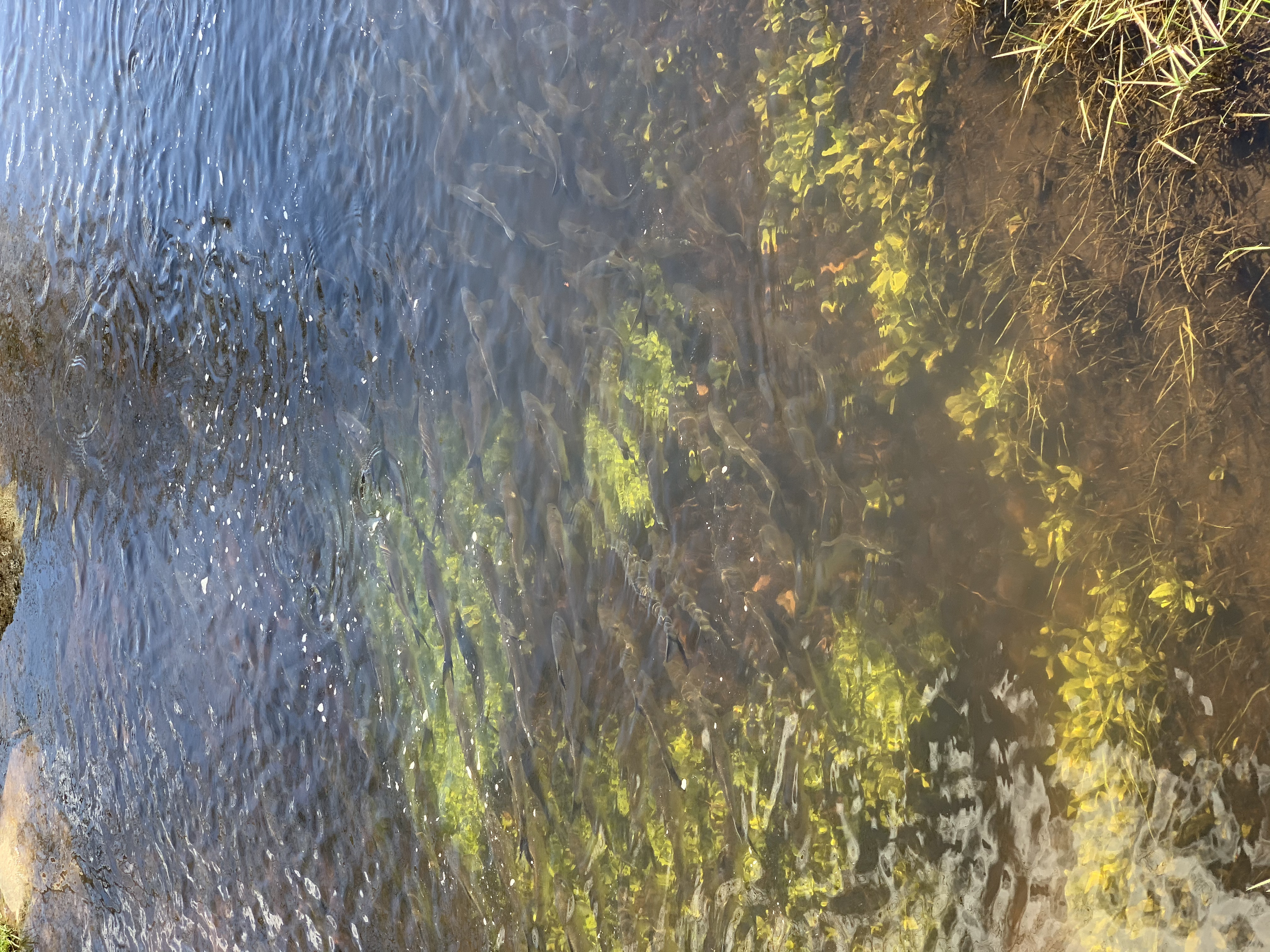
Herring running up a Massachusetts stream.
I feel like most coastal locals have heard the stories from older generations about going down to the herring run with buckets, filling them with herring and using them for everything from bait to fertilizer under crops. That’s probably because river herring were once so abundant across Massachusetts, in some cases traveling through dozens of towns and counties to reach spawning grounds in ponds you might fish today for bass.
With the exception of certain Indigenous tribal members, recreational river herring harvest has been closed in Massachusetts for decades. This closure is largely due to human impact on herring populations and their spawning routes. Dams were installed across nearly every coastal river system in the commonwealth, creating multiple barriers that prevented fish from reaching spawning areas. On top of that, thousands of culverts and pinch points became clogged or impassable without proper fish passage.
So what has changed in recent years? Have closures and dam removals made enough of an impact to bring herring back, and could we actually see harvest return in Massachusetts?
What Are River Herring?
There are two species of river herring in Massachusetts: alewives and blueback herring.
Alewives are the more common of the two, and in some years, scout fish can show up as early as March. Blueback herring are typically larger but tend to run later and aren’t present in every system.
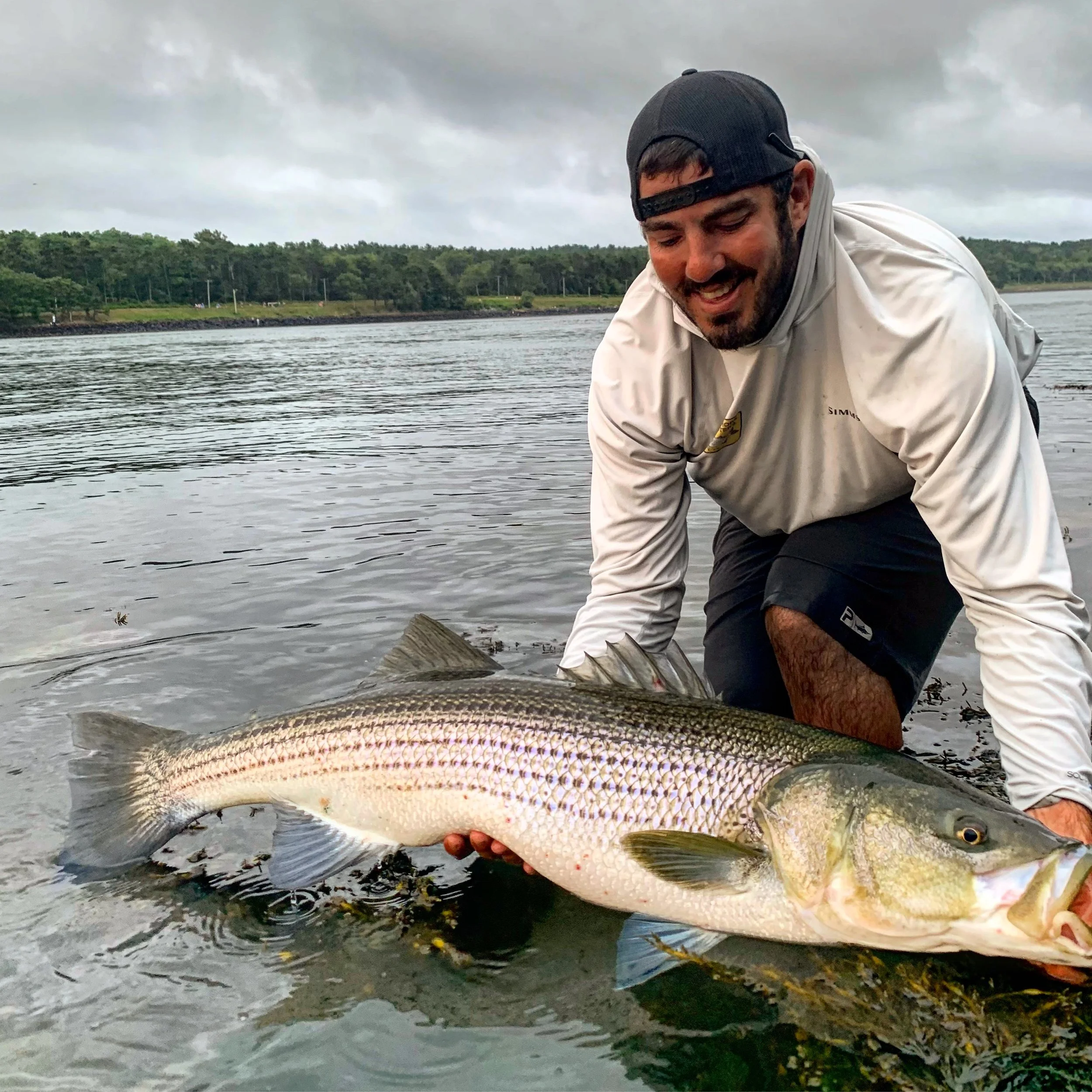
Both species are anadromous, meaning they spend most of their lives in the ocean before migrating into freshwater each spring to spawn. That migration puts them directly in the path of hungry striped bass, which stage and move through many of the same areas that the herring run.
Up close with herring running up a healthy Massachusetts stream
Why River Herring Matter
River herring are one of the most important forage species in Massachusetts.
In the spring, migrating adults feed a wide range of predators including birds, mammals, and fish. Gulls, cormorants, otters, raccoons, coyotes, and striped bass all key in on herring runs as a reliable food source. These runs are often the first areas to come alive after winter, concentrating predators looking for an easy meal.
Even after reaching their spawning grounds, herring remain under constant pressure. After spawning, they head back downstream toward the ocean, again becoming easy targets. Once offshore, they continue to serve as prey for larger fish, whales, seals, and seabirds.
Meanwhile, their offspring support freshwater ecosystems, feeding fish and amphibians before eventually making their own migration out to sea, often triggered by rain events. When conditions like drought, low water levels, or temperature swings interrupt this cycle, it can significantly impact spawning success in a given year which in turn has an impact on everything that depends on the herring.
Human Impact on Herring Runs
Not long ago, most human interaction with herring was as a direct harvester. Today, the biggest impact comes from infrastructure.
Dams built during the Industrial Revolution created major blockages in spawning rivers. Fish ladders were added to help, but they were not perfect. Many required constant maintenance and often created bottlenecks where predators could easily target concentrated fish.
In recent years, progress has been made. Several dams across Massachusetts have been removed or modified, reopening access to historic spawning grounds for the first time in generations. These efforts have contributed to improving river connectivity for herring and other migratory species.
A number of organizations now monitor herring populations and track annual runs. Volunteer efforts play a major role in that work. Groups like the North and South Rivers Watershed Association rely on volunteers to count fish and maintain runs, offering a way for anglers to give back and support local ecosystems.
Additionally, angler-led groups like the South Shore Fly Casters have contributed to stream restoration efforts, bringing an angler’s mindset. After all, who knows what good structure looks like better than a fisherman?
Many of these restoration efforts require a high level of coordination between state and local agencies, as well as private landowners. That’s why it’s so important to have local groups like the NSRWA and SSFC who are willing to spearhead these efforts and help move projects forward.
As progress continues and these ecosystems become healthier, we should start to see more consistent herring runs and continued movement toward the return of limited, sustainable harvest opportunities across the Commonwealth.
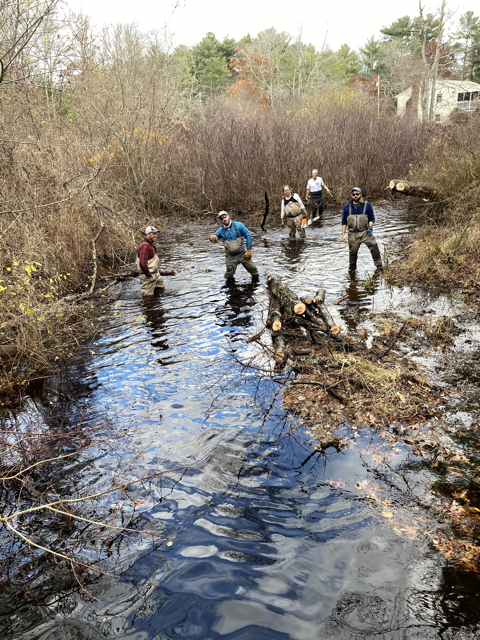
Restoration work by the SSFC (South Shore Fly Casters) on the South River in Massachusetts
Harvesting River Herring in Massachusetts
Herring were once a major resource in Massachusetts. Before modern fertilizers, they were commonly planted under crops. They were also widely used as food and bait, often harvested in large numbers with little regulation.
That lack of regulation, combined with habitat loss, led to a steep decline in populations and eventually a statewide ban on recreational harvest in the mid-2000s.
Since then, herring numbers have shown signs of recovery in some systems. In fact, for the first time in over 20 years, the town of Harwich has approved a limited harvest for 2026, allowing 150 permit holders to take river herring. This milestone highlights the impact of restoration efforts - dam removals, fish passage improvements, and decades of conservation are making a difference.
At the same time, the job is not finished. River herring still face pressure from habitat limitations, environmental conditions, and ongoing human impact. Continued restoration, monitoring, and responsible management will be key to sustaining and expanding this progress.
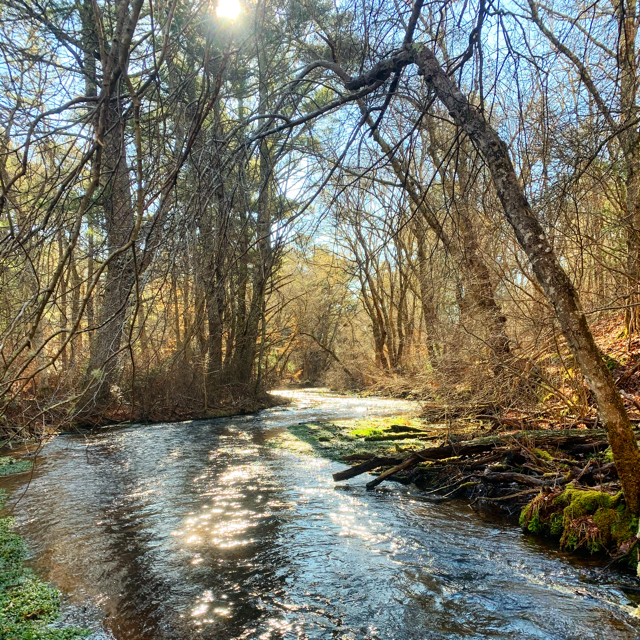
A healthy Massachusetts river and herring run
The Takeaway
River herring are a cornerstone species in Massachusetts waters, and their recovery is a promising conservation story in the region.
There is real headway being made, but it remains a work in progress. With continued effort, better river access, and community involvement, there is a path toward a more sustainable future for herring in Massachusetts.
And if you fish the spring run, you already know. When the herring show up, everything else does too, so get ready.