New 2026 Massachusetts Saltwater Fishing Regulations
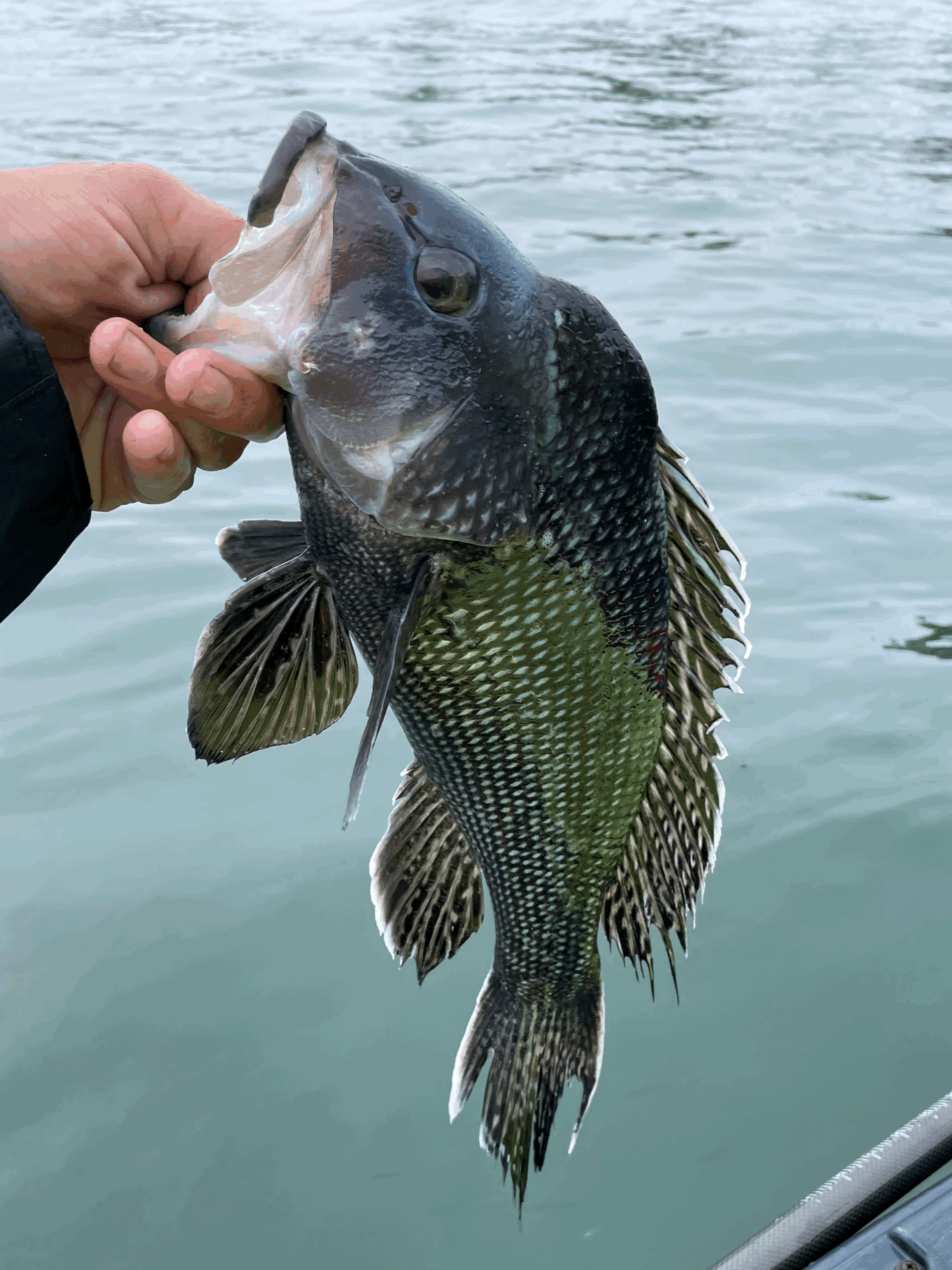
A keeper black sea bass is fantastic table fare.
“Is it a keeper?” — or “keepah,” as we like to say — is one of the most common phrases heard after an angler lands a fish in the surf. The answer to that question seems to change almost every season, and as herring begin their run and striped bass follow close behind, the transition from winter into spring is the perfect time to brush up on the 2026 saltwater fishing regulations so you can confidently decide whether it’s truly a keepah.
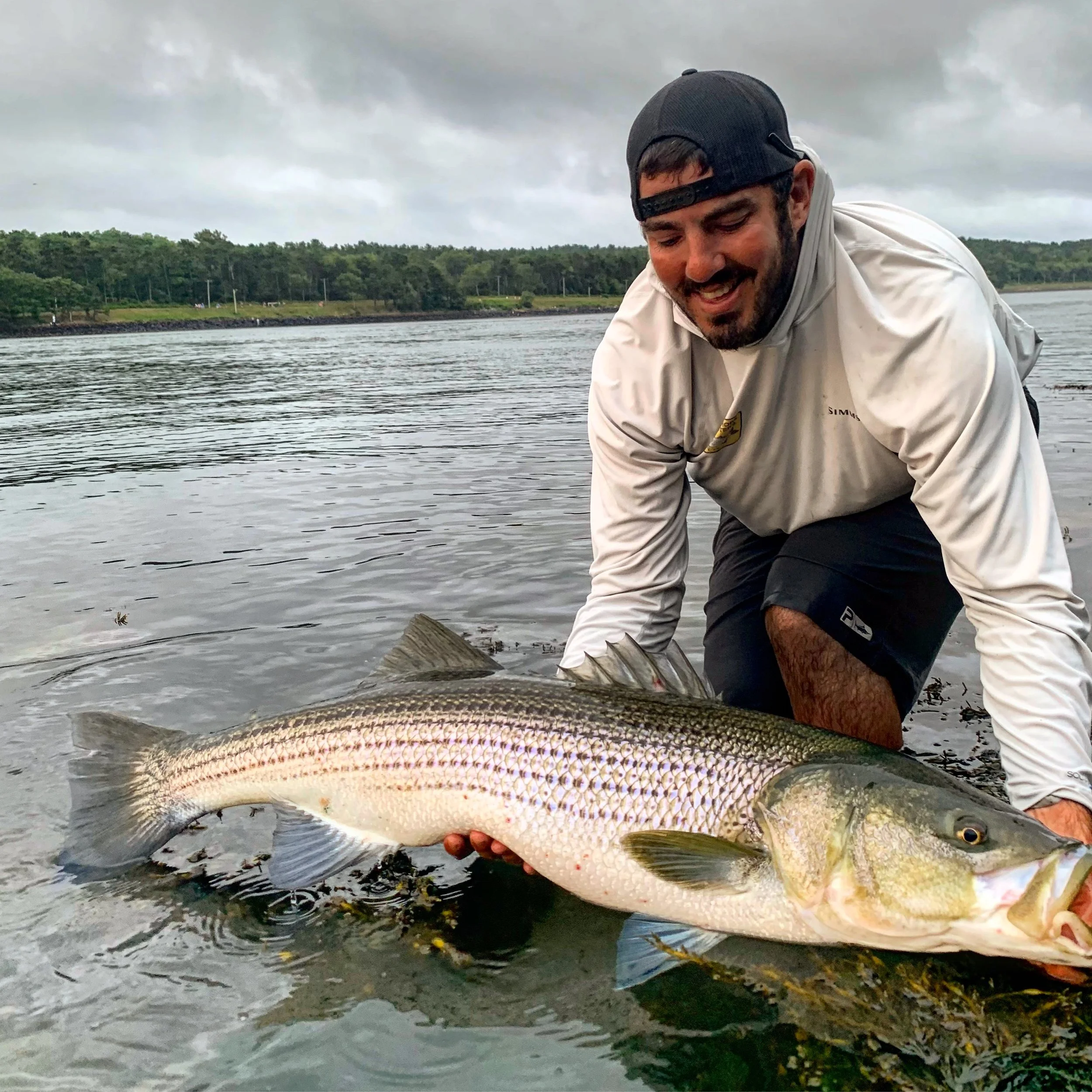
Striped bass remain one of the most sought-after fish in Massachusetts, and in recent years anglers have experienced a roller coaster of regulatory changes. Back in 2012, recreational fishermen were allowed to keep two fish over 28 inches per person. Since then, regulations have steadily tightened, narrowing the slot limit in response to poor recruitment numbers. For 2026, striped bass regulations remain unchanged from 2025: each recreational angler may keep one fish per day measuring over 28 inches but less than 31 inches. While harvest is still permitted, and some anglers continue to keep fish, many have chosen to target alternative species for the table while striped bass recruitment rebounds.
One of my favorite alternatives to striped bass is black sea bass. Regulations for this species have become more liberal in both season length and size limits. In 2025, recreational anglers faced a 16.5-inch minimum size and were allowed four fish per day from May 17 through September 1. In 2026, the minimum size drops to 16 inches. Anglers may keep four fish per day from May 16 through August 31, followed by a two-fish daily limit through October 14. For Massachusetts anglers, this expanded opportunity provides a strong backup plan, especially when targeting hard-fighting species along structure. False albacore anglers also now have a good reason to drop a jig deeper when the hardtails become finicky near the surface.
Speaking of hardtails, although limits remain the same as in 2025, last year marked the first time size and bag limits were implemented for false albacore and Atlantic bonito in Massachusetts. Recreational anglers may possess five fish combined between the two species, each measuring at least 16 inches to the curved fork of the tail. Neighboring states, including Rhode Island, have proposed similar measures, so anglers who rely on reciprocity agreements allowing Massachusetts permit holders to fish across state lines should continue to watch for updates.
As for other species, regulations remain largely unchanged. Fluke, or summer flounder, season runs from May 24 through September 23 with a five-fish daily limit. Fish must measure at least 16.5 inches when caught from shore and 17.5 inches when fishing from a vessel. Another excellent striped bass alternative is scup. Also known as porgy and now golden sea bream, scup are versatile table fare, great as sushi, fried, pan-seared, or cooked whole. Recreational anglers may keep 30 scup per day, with a minimum size of 9.5 inches from shore and 11 inches from a boat.
Tautog is another favorite among anglers looking for quality table fare and is commonly featured in chowders. Tautog, or blackfish, must measure at least 16 inches. Recreational anglers in Massachusetts may keep three fish per day from April 1 through May 31, one fish per day from June 1 through July 31, three fish per day from August 1 through October 14, and five fish per day from October 15 through December 31. Of those fish, only one per angler may exceed 21 inches, and private vessels are limited to a total of 10 fish onboard.
Minimum size to keep 2025 vs 2026
Regulations can be confusing, and depending on quotas and stock assessments, they may change with little notice. Before heading out and harvesting fish for the table, always take a moment to double-check the current Massachusetts saltwater fishing regulations to ensure you’re fishing both successfully and responsibly.
https://www.mass.gov/info-details/recreational-saltwater-fishing-regulations